The Frontier
The American West both abhors art and represents its very nature. Dylan Bartolini-Volk translates that contradiction into work that makes you remember things you forgot you'd seen.

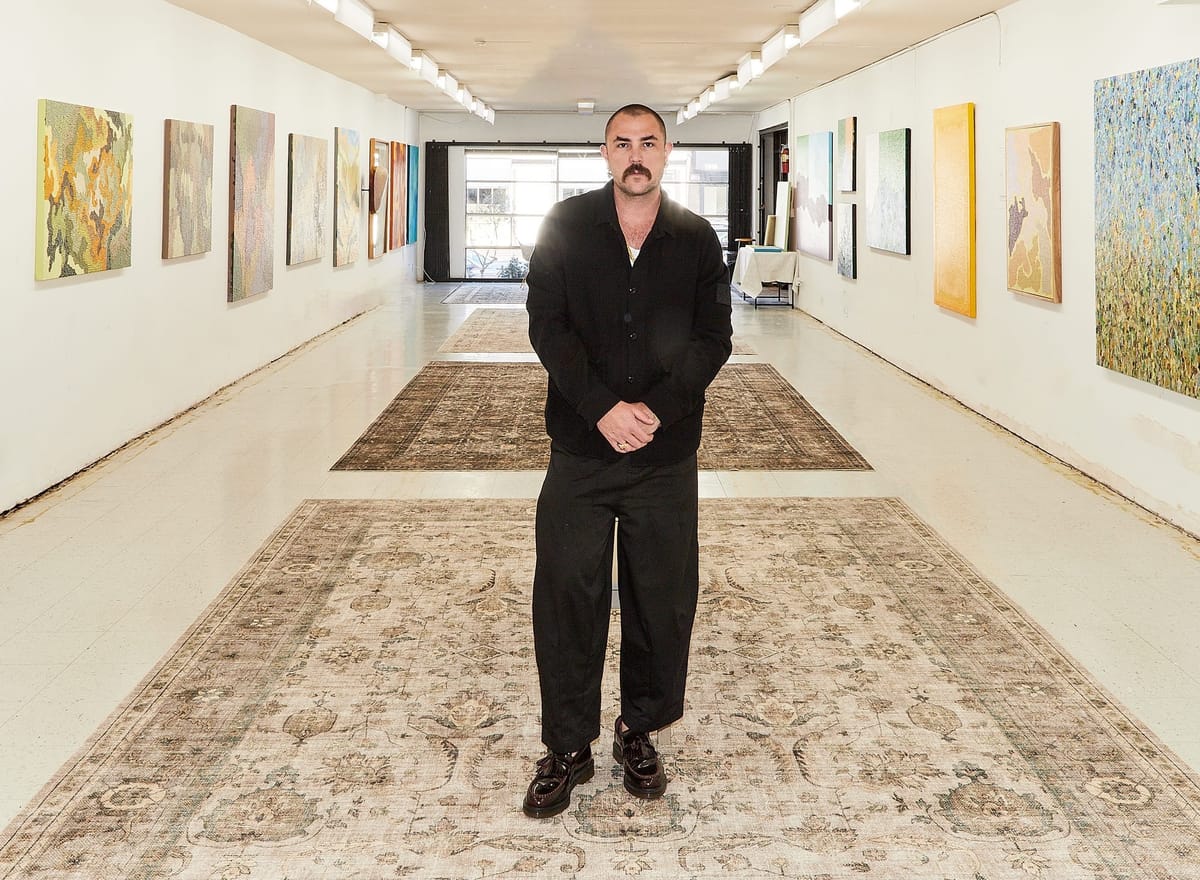
The American West seen through the abstract lens is the horizon; the frontier of one's imagination. It's often the case that what happens within this geography pushes some, often arbitrary, limit that reshapes the world as a whole. And yet, the place itself is a contradiction, artistically. It both abhors art and represents the very nature of it: creation itself. It's tearing itself apart — so much of the American West is unaesthetic, and so much of its landscape is precisely the opposite. Desolate and teeming with life at the same time.
For these reasons, it feels impossible to put an artistic pin into it — to distill its essence. A handful of artists are known for their unique visions: Richard Diebenkorn and David Hockney among the mainstream names, though it's rare for people outside the U.S. to be familiar with their work. Even fewer have heard of Tony Abeyta — which is perhaps why, one afternoon, I found myself wandering into a gallery on Pacific Ave in San Francisco, looking for something I couldn't name. There I met Dylan Bartolini-Volk.
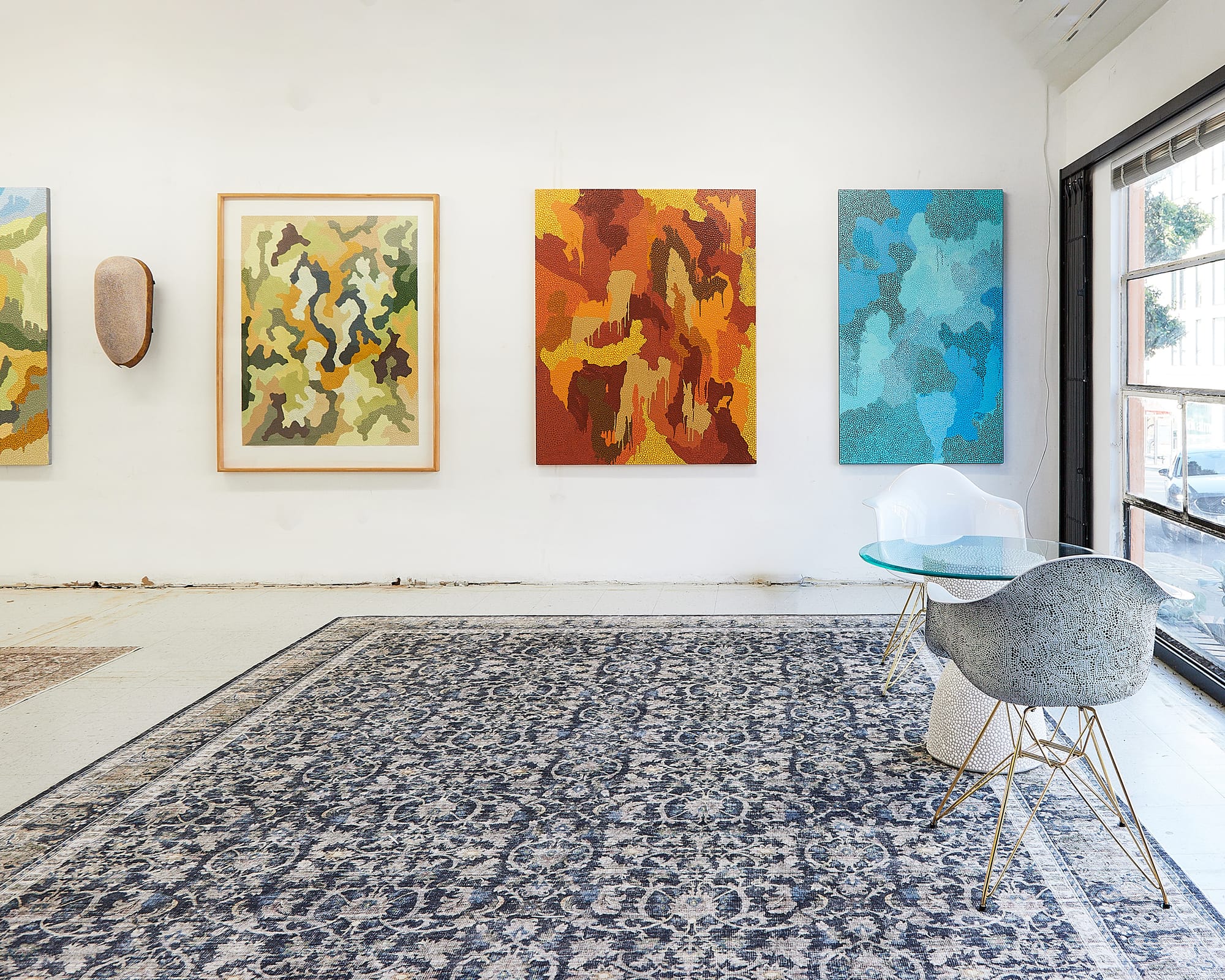
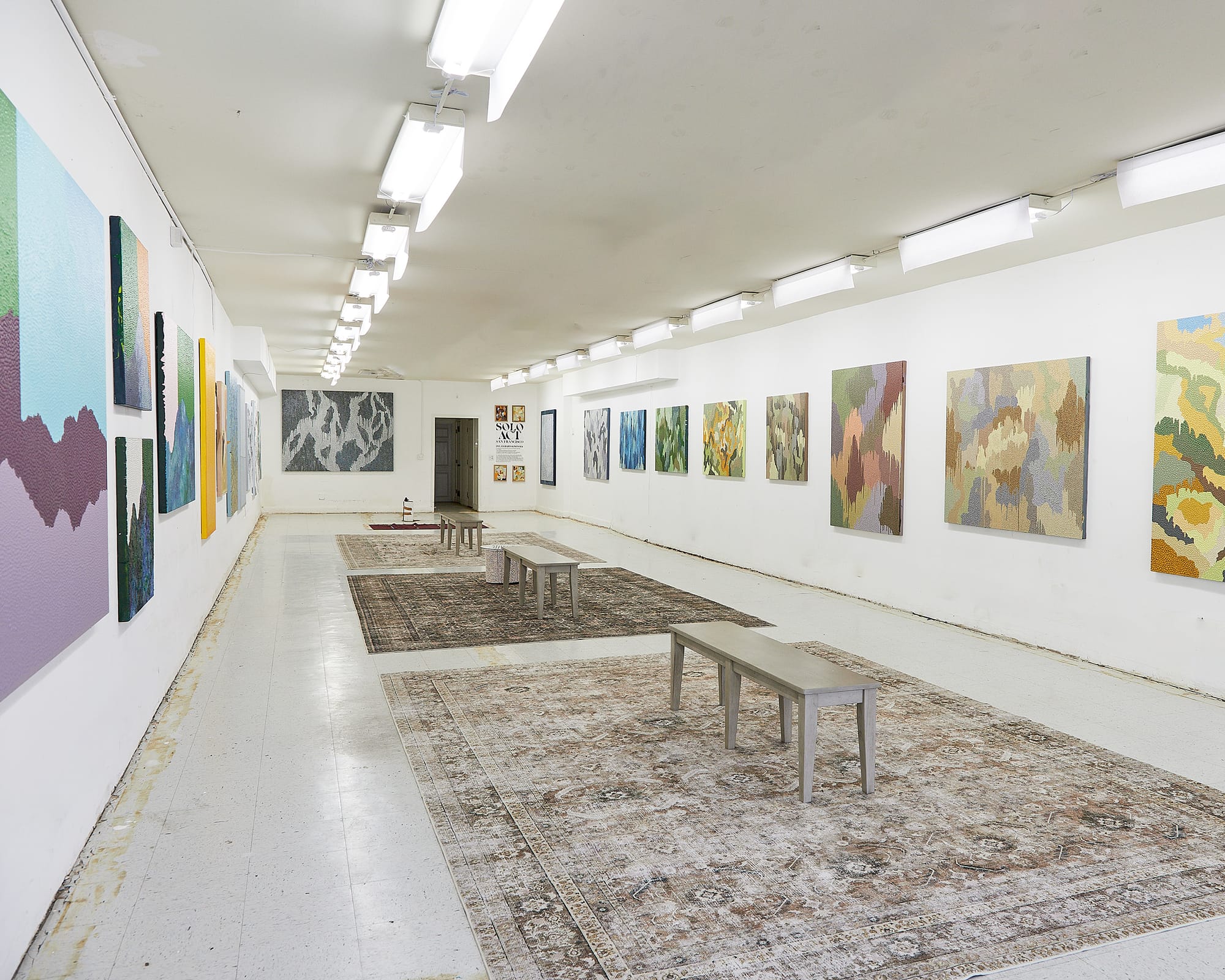
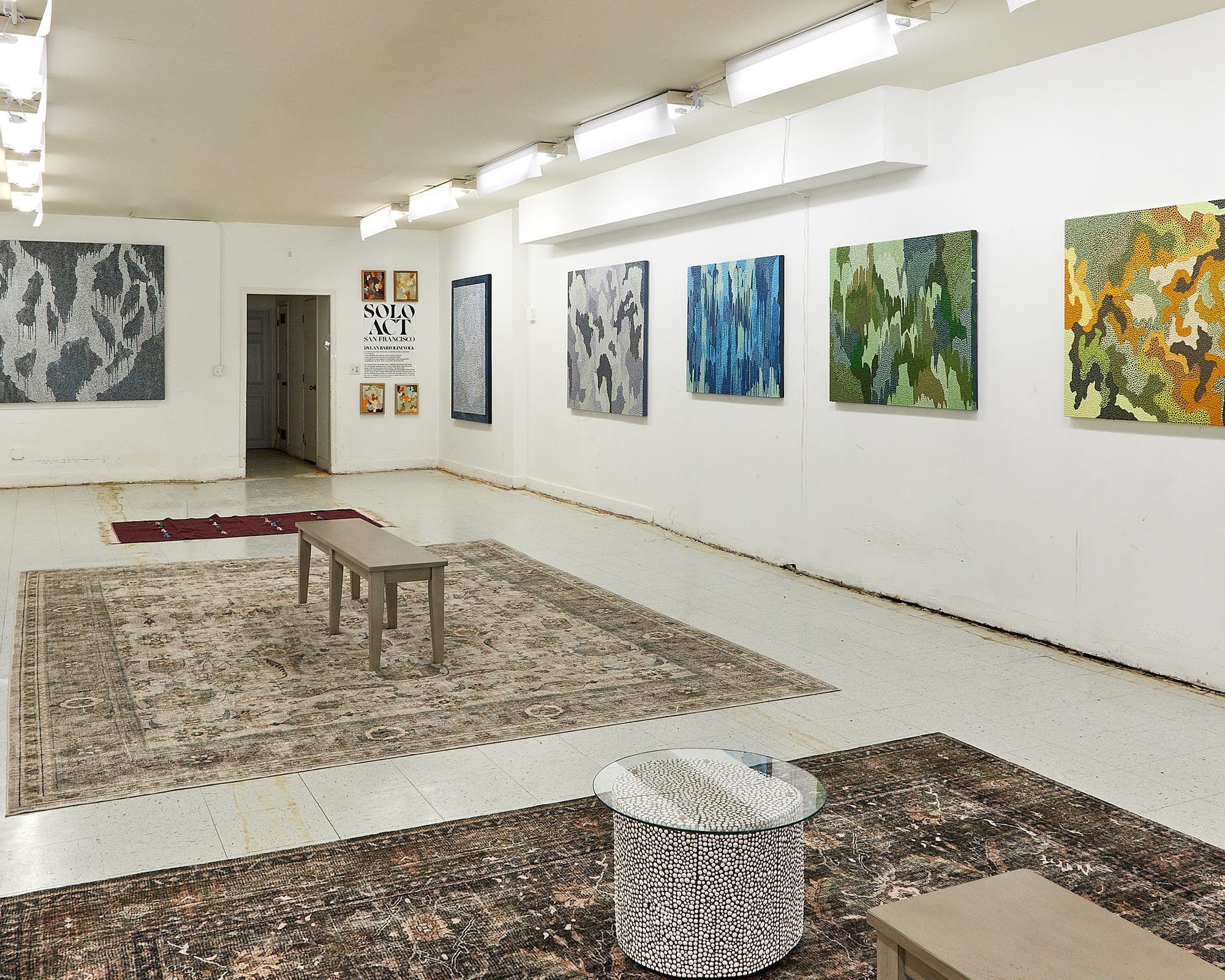
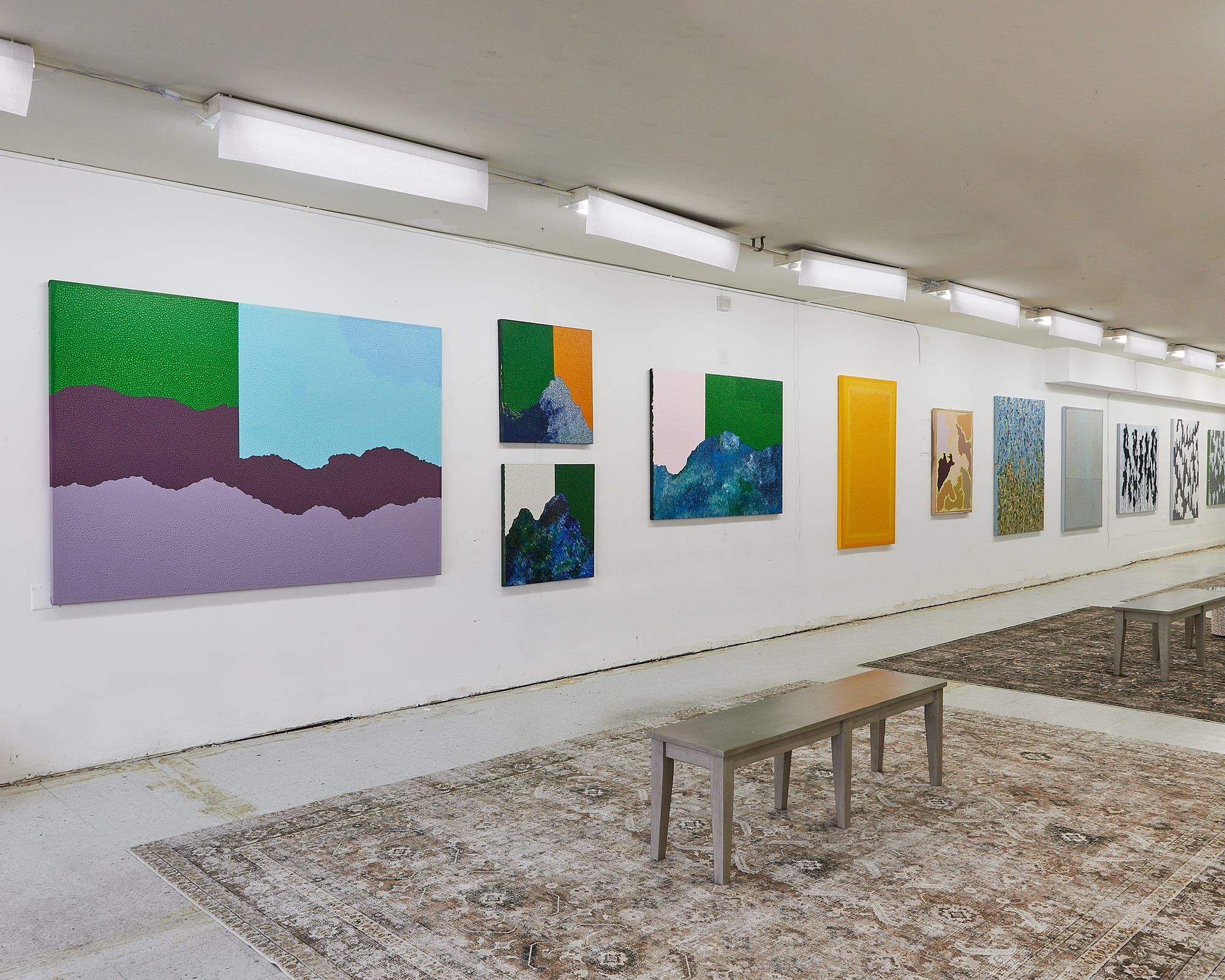
Solo Act, photographs by Dylan Bartolini-Volk
Dylan is an abstract painter and photographer. His career, spanning fine art and commerce, is in many ways a manifestation of the West's tension between natural landscape and commercial impulse. He has more than 15 years of experience as a photographer specializing in content partnerships. But his abstract paintings are meant to transport us somewhere more elemental — his own interpretation of, and reflection on, the place that captivates him, and that captivates the world: the American West.
"I am driven by the reward of hard work, and the belief that life is a gift meant to be wrung dry."
You can feel it in the work. Dylan survived a skull fracture from a high school incident that caused internal bleeding. It took two years before he fully understood the trauma he had endured — and awakened to the realization of life's fragility. Now he is committed to going all in. What better way than to choose the American West as his muse: California, primarily, but also Utah, Nevada, and Arizona.
"I am drawn to the tension between the rigidity of the built environment and the vast, organic systems of the natural world — particularly the absurdity of property lines slicing through ancient terrain."
It's a distinctly Western grievance — and a distinctly human one.
His work is an interpretation of landscape, home, family, and place. The contrasts he pulls together — the trees and rock formations along the San Juan River, for instance — draw from that same contradiction: the tension between wilderness and the human impulse to contain it. He offers a poetic interpretation of how light transforms the land as seasons shift, altering tone and value.
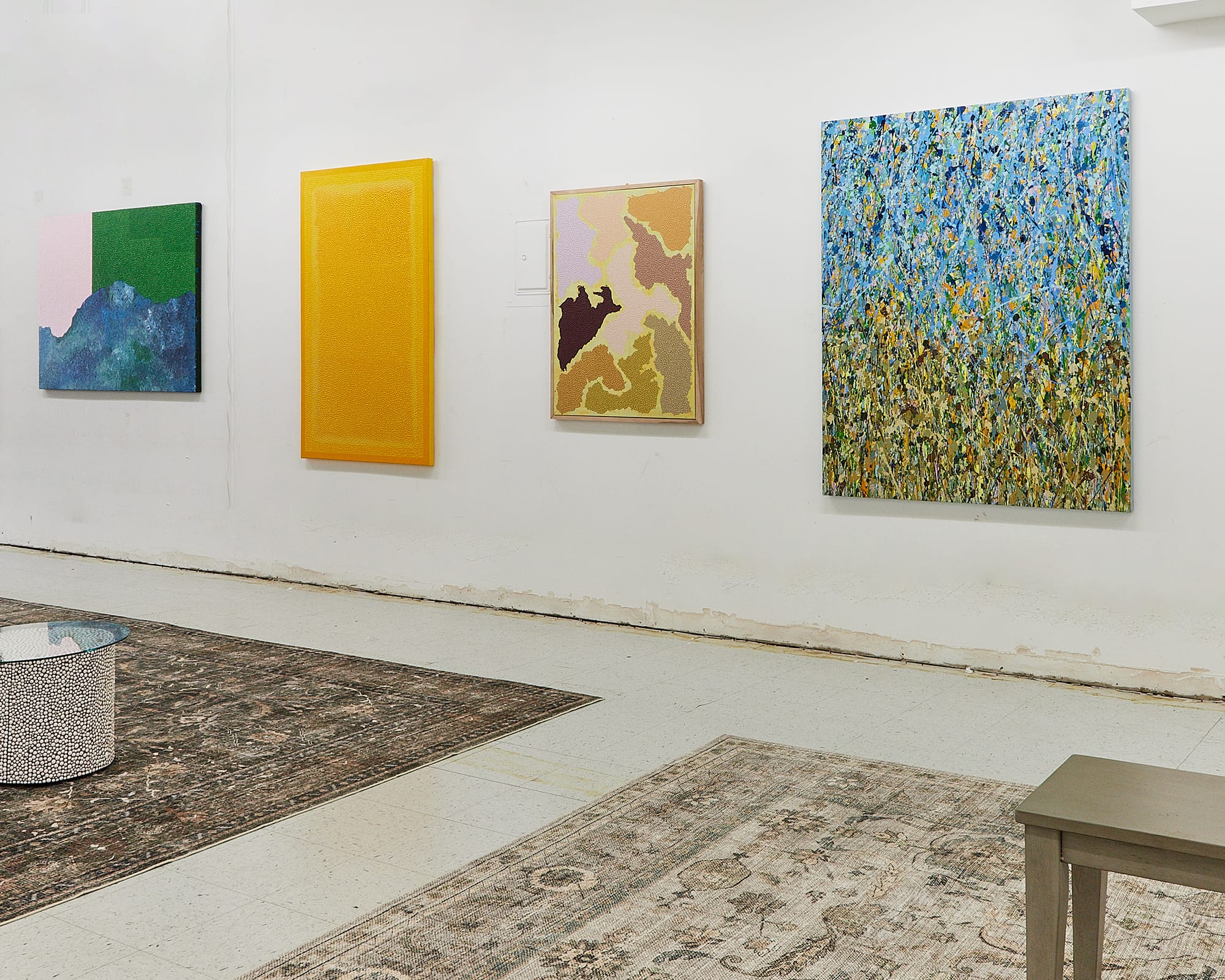
"I value momentum, self-sufficiency, and the pursuit of experience. I expect a great deal from life, and I give a great deal in return."
Seen from afar, his paintings are snapshots of the patterns that define the region. A collection of them begins to tell a story — from winters in Lake Tahoe to the canyons of Utah.
What I enjoyed about his work is that experiencing it, I found myself recounting memories I hadn't visited in years — road trips, open sky, the particular loneliness of a long drive west.
Dylan's work can be seen on www.dylanbartolinivolk.com or in person daily March 7th - 15th, 12-8pm, at 1547 Pacific Ave in San Francisco. Closing reception: March 14th, 5-9pm.